Economy and public services · Legislative proposal
Brazilian bill would waive medical exam costs for some public-exam candidates
The proposal concerns a defined group and a later stage of public hiring. Candidates should continue to follow the notice for their current selection.
What PL 3282/2026 proposes
A House of Representatives news release dated October 9, 2026, describes Bill 3282/2026. It proposes waiving costs for medical exams, reports and physical or mental fitness assessments for low-income candidates and bone-marrow donors who pass public exams for permanent positions in Brazil’s direct and indirect public administration. The proposal points to free service through Brazil’s Unified Health System (SUS), agreements or the hiring agency’s occupational-health structure.
The House tracking page lists the bill as awaiting designation of a rapporteur in the Administration and Public Service Committee. The proposal still needs legislative approval. A news headline does not change the requirements of an active selection or authorize a candidate to skip a required exam.
Keep each cost tied to the current notice
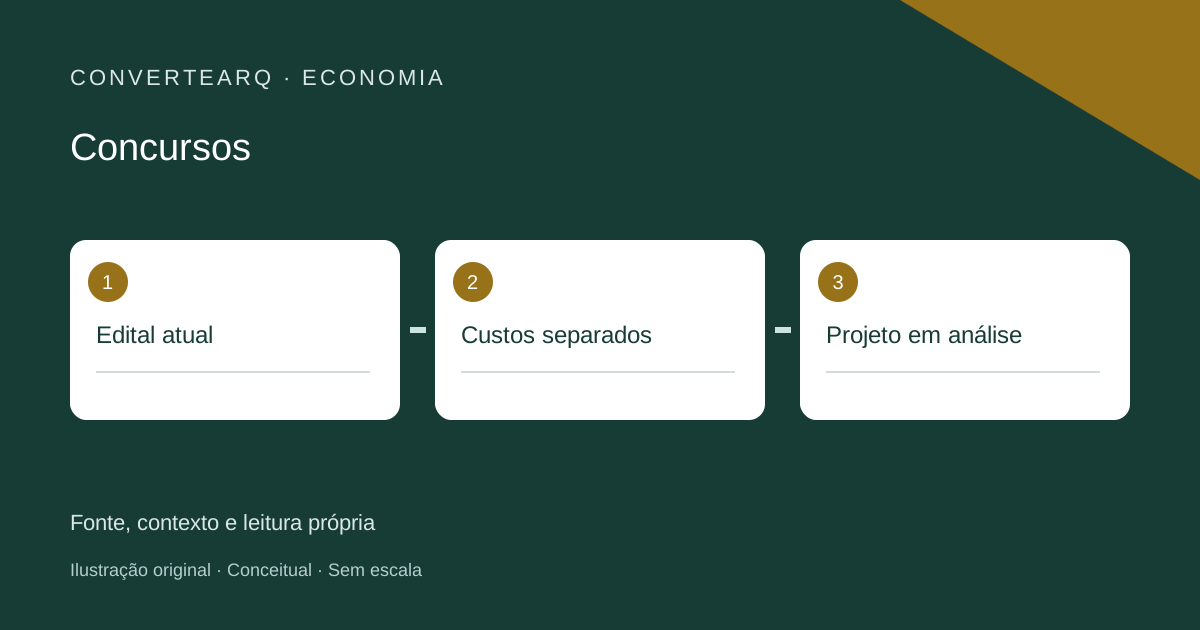
For a specific competition, list the application fee, travel, documents and medical exams separately. Record which item the official notice requires and the deadline attached to it. This makes it easier to ask the organizer a precise question without sharing medical records or income data that are not needed.
The bill concerns a proposed rule for eligible groups. It does not assess an individual candidate’s income, health, eligibility or fitness. Until a rule applies to a particular selection, the published notice and official instructions remain the practical reference.
A fictional planning example
Imagine a candidate who has passed a public exam and is organizing the costs of the medical stage. They keep the expense required by the current notice in the budget and place the proposed exemption in a separate “possible future change” column. They review that estimate only if an official rule or instruction changes.
This is a fictional example, not legal advice or a prediction that the bill will pass. Keep the notice version and any official correction together; an isolated social-media post may omit the selection, date or rule it refers to.
Sources and verification
The House news release is dated October 9, 2026. We checked the bill’s official tracking page on October 20, 2026; its listed status is pending rapporteur designation in CASP. This translation preserves the Brazilian scope.
ConverteArq commentary
Our editorial view is that costs after the application fee deserve clear attention. The bill raises a public-policy question about barriers in the later stages of recruitment, while its present legal status remains a proposal. Calling it an immediate exemption would create an expectation the official record does not support.
The useful step today is to organize each requirement, source and deadline, then monitor the legislative record. This helps candidates seek clarification without exposing diagnoses or income documents publicly. It does not decide eligibility or replace instructions from the exam organizer.