Natural and Artificial Satellites: Differences and Earth Observation
A satellite is a body that orbits another: the Moon is natural, while artificial satellites are machines launched into space. The sources consulted relate instruments to missions, cite Aqua and Aura among satellites that observe Earth, and identify 1957 as the year Sputnik-1 was launched. [1] [2]
2026-11-10 · Redação ConverteArq
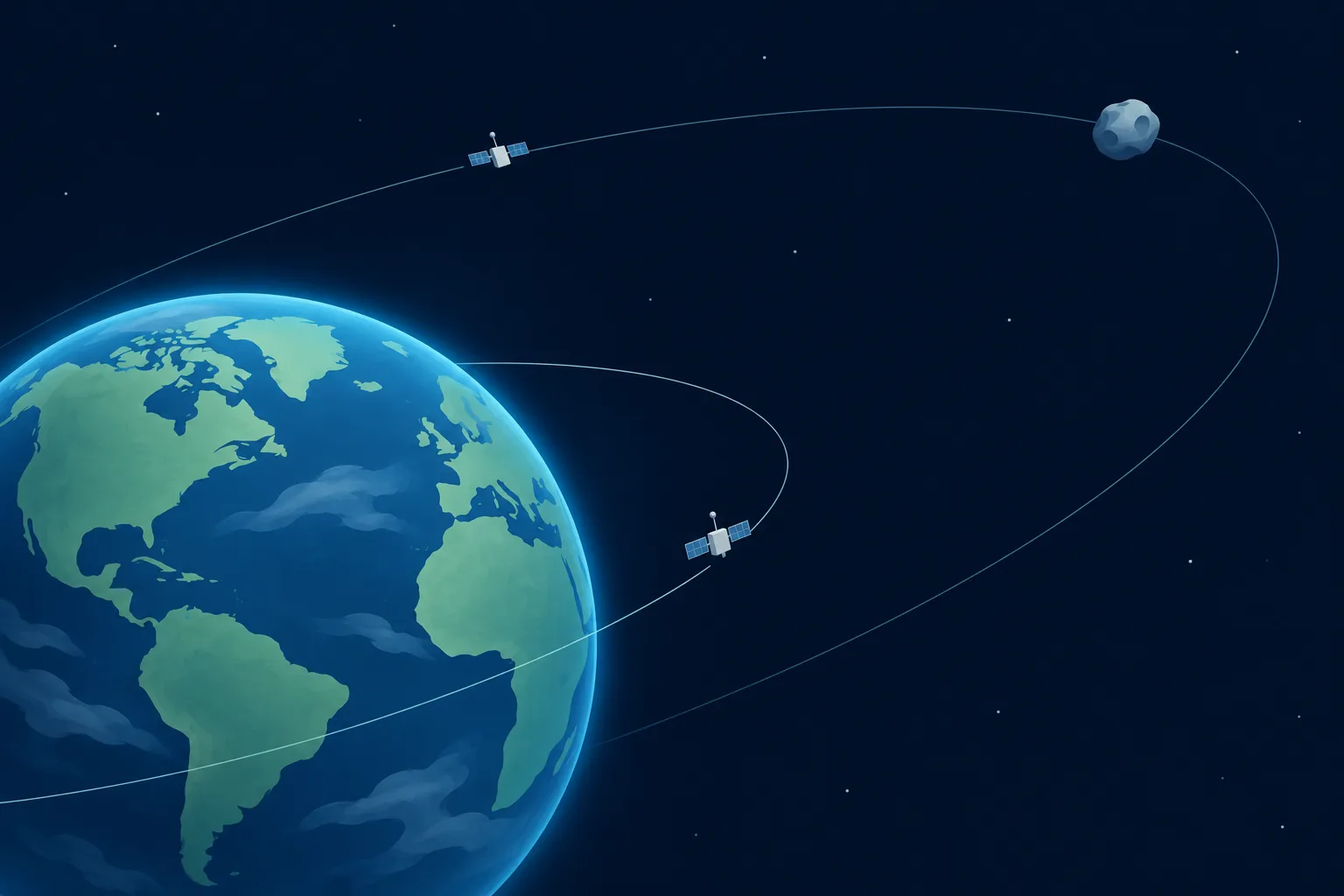
What the word satellite describes
A satellite is a body that orbits another body in space. The definition covers two categories: natural and artificial. NASA uses Earth and the Moon as examples of natural satellites and says that the Moon orbits Earth. The word itself therefore does not mean that an object was built by people; its origin distinguishes the categories. [1]
NASA defines an artificial satellite as a machine launched into space that orbits a body. This helps separate two ideas that often appear together: what the object is and what it is used for. The definition describes its nature and motion; its mission and instruments concern the functions it may perform. [1]
Missions, instruments, and observation
According to NASA, artificial satellites can vary in shape and size and carry different instruments to perform different functions in space. The page also explains that missions are established for specific purposes and that engineers develop satellites to perform the functions needed for each mission. In practical terms, this connects the equipment to the flight’s objective without implying that all satellites have the same instruments or tasks. [1]
On the NASA page consulted, Aqua and Aura are listed among the satellites that observe Earth. They are examples in this category, but the available passage does not detail their instruments or establish specific measurements or capabilities for them. They illustrate that Earth observation is one of the purposes mentioned, without turning that reference into a technical description of the missions. [1]
The same source describes communications between Earth and a spacecraft as including commands sent to the spacecraft and scientific data received on Earth. It also mentions using radio waves to send signals to antennas, but the excerpt ends before completing that explanation. The passage supports the existence of these two directions of communication and the reference to radio waves; the supplied material does not establish further technical details. [1]
The 1957 milestone and the variety of uses
NOAA identifies Sputnik-1 as the first artificial satellite and reports that the Soviet Union placed it in orbit around Earth in 1957. The excerpt supports annual precision, not a full date. For that reason, 1957 can be presented as a historical milestone cited by the source, without adding a day or month. [2]
NOAA also lists weather and communications satellites, deep-space telescopes, and Global Positioning System (GPS) satellites among examples of objects orbiting Earth. The list shows the range of categories cited by the source; it should not be read as a current or complete inventory. Together with NASA’s examples of Aqua and Aura, it places Earth observation among different uses and missions, while making clear that the excerpts provide no sensor specifications. [2] [1]
Context and analysis
Editorial analysis: the most useful distinction for readers is between origin, purpose, and communication. Natural or artificial describes a satellite’s category; missions and instruments describe objectives and means; communication concerns the exchange of commands and data mentioned by NASA. These dimensions are related but not interchangeable. This organization avoids inferring which sensors a mission uses or what results it produces from its name alone. [1]
Editorial analysis: the institutional examples serve different roles in this explanation. NASA supports the definitions, the relationship between missions and instruments, the Aqua and Aura examples, and the partial description of communications. NOAA provides the annual milestone of 1957 and a list of satellite categories in orbit. The available excerpts are insufficient to detail sensors, compare performance, or claim that the list represents the current landscape; stating these limits keeps documented information distinct from interpretation. [1] [2]
Sources and references
- NASA — What is a satellite? - NASA
2018-09-05 · 2026-11-10 · en
- NOAA NESDIS — What IS a Satellite? | NESDIS | National Environmental Satellite, Data, and Information Service
Date not provided · 2026-11-10 · en