SNCT 2026: MCTI announces experiences involving minerals and microscopy
MCTI announced experiences involving 3D microscopic images, everyday minerals, fruit waste and a virtual representation of a physicist for the 23rd National Science and Technology Week, scheduled for November 24 to 29, 2026, at the Esplanada dos Ministérios in Brasília. [1]
2026-11-13 · Redação ConverteArq
A program announced for Brasília
In a news article published on November 13, 2026, the Ministry of Science, Technology and Innovation (MCTI) presented attractions planned for the 23rd National Science and Technology Week. The event was announced to take place from November 24 to 29 at the Esplanada dos Ministérios in Brasília. Because the news article predates the scheduled period, these details describe a future program and do not prove that the activities took place. (snct-2026-local-e-datas) [1]
The announcement links four institutions affiliated with MCTI to the program: the Center for Mineral Technology (Cetem), the Center for Strategic Technologies of the Northeast (Cetene), the National Institute of Technology (INT), and the Brazilian Institute of Information in Science and Technology (Ibict). According to the ministry, research from these institutions’ laboratories would be presented to the public through games, experiments and exhibitions. The available excerpt does not link each format to a specific institution. (instituicoes-participantes) [1]
Topics announced for the experiences
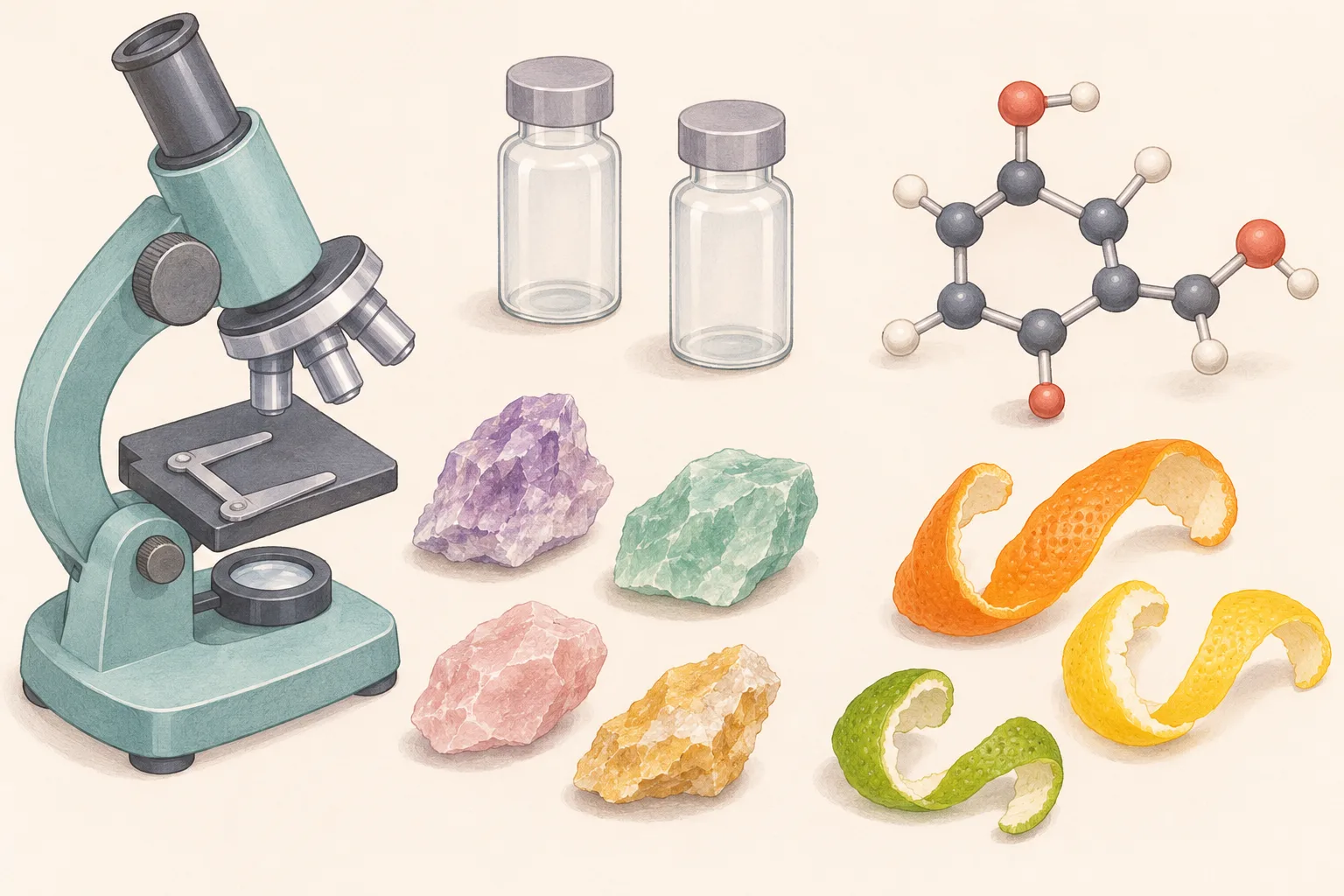
The activities mentioned include observing 3D microscopic images and discovering minerals found in everyday life. The excerpt does not say how these experiences would be organized, which minerals would be presented or what equipment would be used. The announced topics can be identified, but the practical execution of the demonstrations cannot be described. (experiencias-divulgadas) [1]
The news article also mentions showing how fruit waste can be turned into new products. It does not specify the waste, products or processes involved. The information therefore supports the claim that this topic was part of the announced program, but it does not allow a claim that a particular product would be made or that the activity would demonstrate the viability of a technology. (experiencias-divulgadas) [1]
Another attraction described was a conversation with a virtual representation of a physicist. The excerpt does not identify the person or explain how the interaction would work. There is therefore no basis for assigning the representation an identity, a specialty or technical characteristics beyond the description released by MCTI. (experiencias-divulgadas) [1]
The edition’s theme and the limits of the announcement
MCTI said the 2026 edition would have the theme “Ciência Delas” (“Their Science”), highlighting women’s contributions to science, technology and innovation. The material provided does not explain how each activity would relate to this theme. It is therefore not possible to conclude that all attractions would directly address women researchers or gender issues. (tema-snct; instituicoes-participantes) [1]
For those considering attending the week, the news article provides the planned dates, the event location, the names of the institutions and the general topics of some experiences. The excerpt does not provide schedules, conditions of access to each attraction or operational details. The Esplanada dos Ministérios is identified as the location, without a specific address. (snct-2026-local-e-datas; instituicoes-participantes; experiencias-divulgadas) [1]
The announcement describes games, experiments and exhibitions as ways of presenting laboratory research to the public. This records the proposal publicized by the ministry, but it does not demonstrate that the activities took place, that new scientific results were obtained or that there were educational effects. The material provided does not include a later account or an assessment of the program. (instituicoes-participantes; experiencias-divulgadas) [1]
Context and analysis
Editorially, the announced topics offer different ways to bring the public closer to scientific subjects: observing microscopic images, recognizing minerals in everyday life and thinking about uses for fruit waste. This reading is based on the variety described by MCTI; it is not an assessment of how the attractions worked. Without participation or learning data, it cannot be claimed that the program produced a specific educational effect. (experiencias-divulgadas; instituicoes-participantes) [1]
The theme “Ciência Delas” (“Their Science”) gives the edition a framing centered on women’s contributions, according to MCTI’s announcement. Editorially, this wording may guide how the program is read as a whole, but the excerpt does not detail its connection to each experience. The relationship between the theme and the attractions therefore remains general in the available material; there is no evidence to say that all of them would directly address women researchers or gender issues. (tema-snct; instituicoes-participantes; experiencias-divulgadas) [1]