Consumer guidance · explainer
Inmetro toy-safety guidance: what to check before buying for children
Brazil’s National Institute of Metrology, Quality and Technology (Inmetro) published two October notices about children’s products. One sets out information to check when buying; the other warns that heating, cutting or puncturing squishy toys can create risks. The warning concerns misuse and does not say that every toy of this kind is irregular.
This article was prompted by the Google Trends Brazil group “feliz dia das crianças” (“happy Children’s Day”), observed October 12, 2026 at 18:04:30 Brasília time. The search trend suggested a reader question; it does not establish why people searched. The facts below come from the official notices linked in the source list. Google Trends Brazil trend page (Observed search group: “feliz dia das crianças”).
What the October notices say
In a notice published October 9, Inmetro advises consumers to check the product and supplier identification, the recommended age range, safety warnings and instructions. Check the conformity seal when it applies to the product. For online purchases, the agency also recommends reviewing information about the item and seller and keeping proof of purchase.
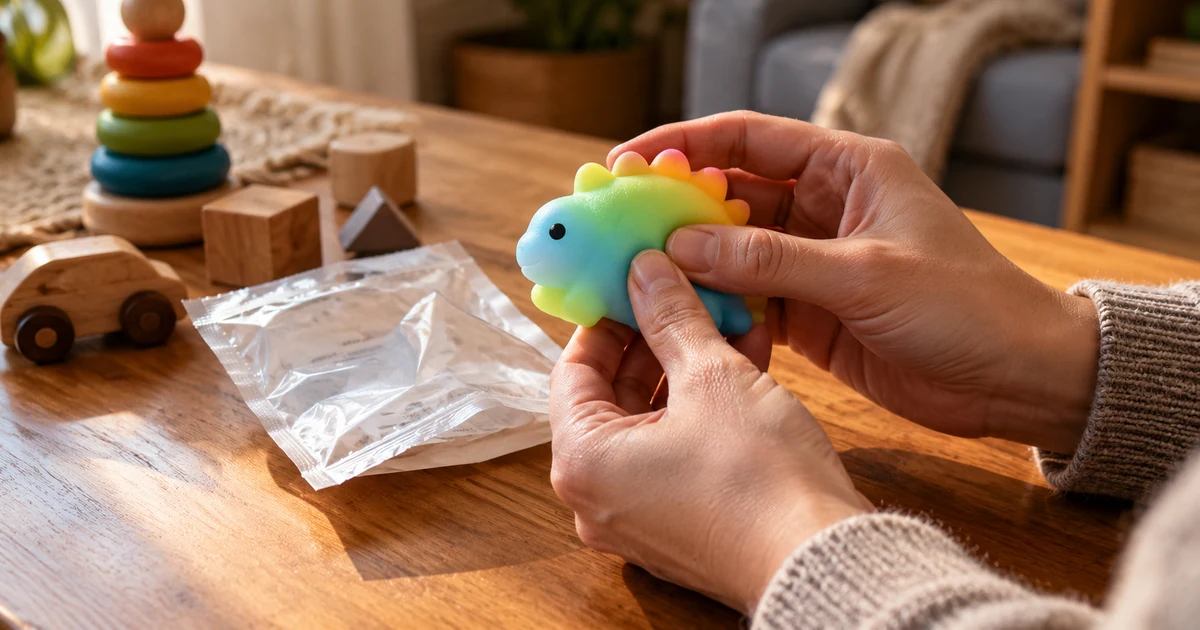
A separate notice was published October 1 and updated October 2. It says squishy toys should not be heated in a microwave, oven or other heat source, and should not be cut, pierced or otherwise changed beyond the manufacturer’s intended use. The caution is about unsafe practices; it does not label every squishy toy as non-compliant.
Turn product information into a checkable list
Before deciding, write down four things you can verify: what the product is, who supplies it, which age group it is for, and where its instructions appear. Use the packaging or the seller’s description. If something is missing, mark it “not provided” instead of guessing from a photograph. This checklist helps organize questions; it is not a safety certification.
For example, imagine comparing two similar-looking online listings. One shows an age recommendation; the other shows only a product photo. Their similar appearance does not fill in the missing information. Ask the seller about identification and instructions for that specific item. We did not inspect either product or shop for this example.
A video demonstration is not product guidance
If a video shows someone changing a toy, compare the demonstrated steps with the instructions for the exact item you have. A video documents what its creator did; it does not show that the manufacturer intended that use. For a squishy toy, follow the product instructions and do not repeat heating or cutting experiments to find out what happens.
Keep your notes with the product identification and receipt. Then a follow-up question can refer to the correct model and the information that is missing. This is a way to organize a review, not a laboratory safety assessment, an accident diagnosis or a finding about a particular product’s compliance.
Primary sources
Official Inmetro notices consulted October 12, 2026. The Portuguese original identifies the search group and observation time; no search volume or reason for the trend is inferred.
ConverteArq editorial comment
In our view, the useful part of these notices is a small, verifiable decision: check the product information before relying on appearance. Showing where to find identification and age guidance is more responsible than publishing a list of supposedly safe purchases without examining the items. It also matters to distinguish a warning about a practice from an accusation against a manufacturer or seller that the official notice does not make.
The same distinction applies to videos. Curiosity can prompt good questions, but a demonstration does not replace the instructions for a product. A short checklist can help readers identify what is missing and ask about the exact item. The examples here are fictional; they are not laboratory tests, shop inspections or buying recommendations.