F1 car lights: what they signal and what a clip cannot prove
Prepared with AI assistance; sources are identified and the commentary is original. Editorial method and corrections
Formula 1’s February 25, 2026 guide explains the rear and side lights introduced for the 2026 cars. The rear signal can communicate information about energy and safety; amber side lights help identify a stopped or very slow car. This article summarizes that earlier guide. It does not announce a new system or diagnose a real incident from a single image.
The official guide dates to February
Formula 1 published its explanation of the 2026 rear and side lights on February 25, 2026. It describes the rear impact structure light as a way to communicate power-unit energy states and safety information. The guide also describes amber lateral lights, placed so they can be seen from the side and front, for a stopped car or one moving below 20 km/h. These details describe the system in that guide; this article is not a new launch announcement.
The rear light may indicate different conditions, including energy delivery or recharging, certain track warnings, a stopped engine or intermediate and wet tyres. A signal has a defined meaning in its technical context. The article does not reproduce a complete code table, and a viewer should consult the official explanation before assigning a specific meaning to a sequence.
Signal, context and interpretation
A broadcast frame shows only part of an event. To discuss a light, separate what is visibly present, when it appears and what the applicable technical guide says that signal means. If the frame omits earlier footage or other context, acknowledge that gap rather than treating the image as a full diagnosis.
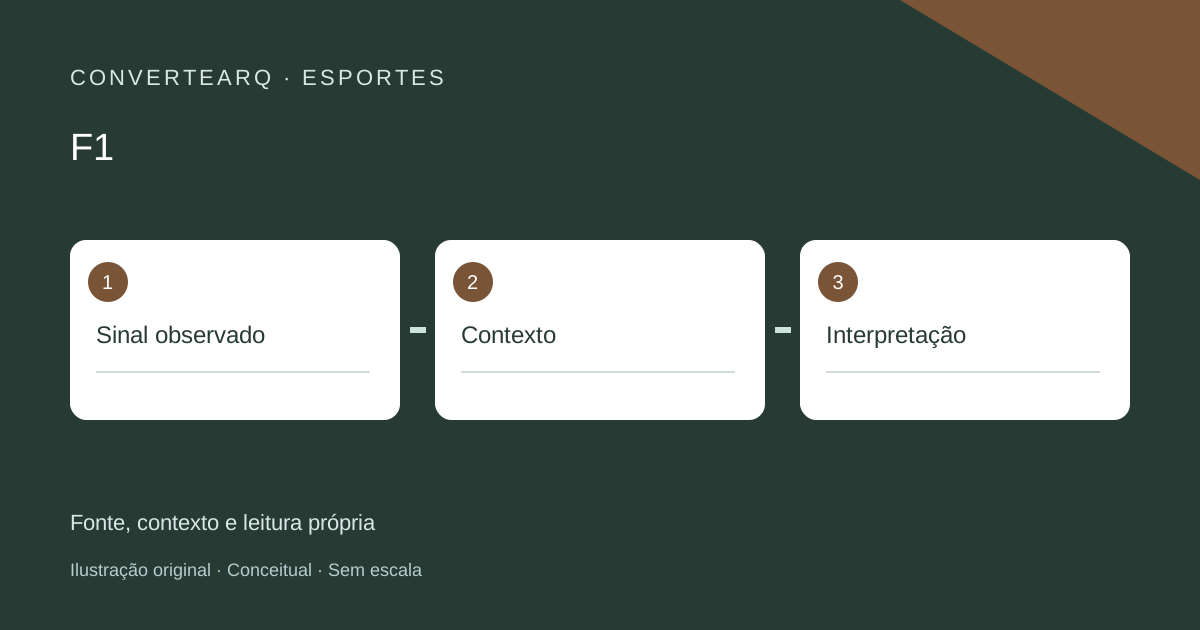
A short clip may show a flashing light on a straight, for example, but that alone does not establish the complete energy state, the cause of a change or a driver’s intent. Nor does it prove a fault or an infringement. The concept illustration on the Portuguese source page organizes those reasoning steps; it is not a complete technical manual.
A teaching example without an identified driver
Imagine a fictional recording in which a light flashes but the preceding moments and energy data are unavailable. The recording supports the limited observation that the light was visible in that frame. It cannot, by itself, establish why it flashed. No driver or real manoeuvre is identified in this example.
A report about a specific race would need documentation and sources for that competition and incident. This guide does not give a qualifying result or assign responsibility. Its purpose is to help viewers distinguish what a camera shows from what still needs confirmation.
Sources and verification
Formula 1’s official explanation was published on February 25, 2026 and checked for this translation. The Portuguese source page was published October 11, 2026. This translation preserves its scope and does not independently test the lighting system.
ConverteArq commentary
Visual signals are a useful way into a complex system, but a useful explanation keeps the surrounding conditions in view. A technical description can clarify a light’s function without turning a single image into a judgment about a driver.
We also keep this guide separate from result reporting. The search that prompted the question supplies editorial context, not telemetry or confirmation of a race event. Naming the date of the official February guide lets the page remain useful without presenting older information as a new announcement.