Using a phone in the car: prepare technology before the trip
This translation was prepared with AI assistance and checked against the cited source. Editorial policy
Official guidance prioritizes preparation before driving and a suitable stop when an adjustment is needed. Voice features also require attention.
What the official guidance says
On October 5, 2026, Brazil’s Ministry of Communications published advice on avoiding distraction from phones and other devices on the road. It recommends planning a trip and setting the route before driving, then stopping in a permitted, safe place if an adjustment becomes necessary. Voice features do not remove the attention required for driving. This article does not calculate risk, report an app test or interpret individual fines or legal classifications. Its purpose is to turn the guidance into a simple preparation sequence while keeping the task of driving in focus.
What to organize beforehand
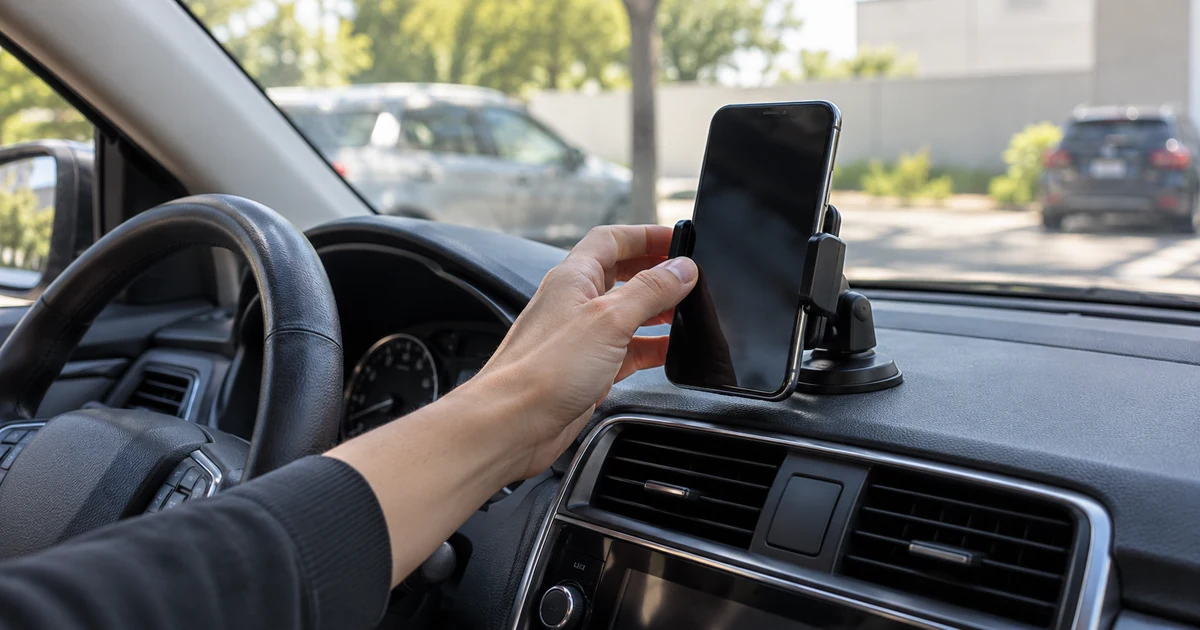
A preparation note can list the destination, route and information that should be available before departure. If someone else is travelling with the driver, they may help check those details when appropriate, without asking the driver to handle a device while driving. This is an organizational example, not a guarantee against distraction. The cover is an AI-generated illustration of a phone mount being adjusted while the vehicle is parked. An easy-to-use interface does not determine when it is appropriate to use it. The practical question is whether a task can be completed before moving or wait until a suitable stop.
A hypothetical change of destination
Imagine that a trip’s destination changes after departure. The need to reach a new address does not make a screen adjustment an urgent task to perform while moving. This example discusses priorities and planning; it does not describe a real route or recommend a place to stop. Safety guidance and local conditions must be followed. A message can be read or answered later, while driving requires sustained attention. If you want to assess a technology feature, do so in an appropriate setting with the vehicle parked; do not use a trip to demonstrate an app’s capabilities.
Sources and verification
Brazil’s Ministry of Communications published the guidance on October 5, 2026. The source was checked again on October 17, 2026.
ConverteArq commentary
We think useful supporting technology should reduce unnecessary decisions during a task that demands attention. The issue is not just the number of screen taps: a voice prompt can also occupy the driver. That is why we organize this explanation by when a task can be done, encouraging preparation and adjustments outside the drive instead of presenting features as an automatic solution.
We also avoid promising that an app makes a trip safe. Its usefulness depends on context, behaviour and conditions that this article does not measure. The value here is to help readers identify what can be prepared in advance and what can wait. This keeps the guidance practical without inventing crash statistics, comparative tests or conclusions about individual situations.