Politics and public information · The Senate report was published October 9, 2026; official TSE material checked October 19.
Voters with disabilities: election access goes beyond the voting machine
The published figure of nearly two million voters with disabilities makes it useful to check access to the polling place, information and available support.
Editorial selection based on official sources. This article does not claim the subject was among Google Trends’ top 30 rising searches.
Figures reported in October
A Senate report published on October 9, 2026 records 1,970,165 voters with disabilities, about 42% more than in 2022. It also discusses accessibility resources such as tactile identification, audio and Brazilian Sign Language (Libras), as well as barriers at polling places. The increase in registrations does not prove that every barrier has been removed. Registration data, the features of a polling section and an individual voter’s experience are different kinds of information. This article uses institutional material and planning questions; it does not reproduce personal accounts or assume an individual voter’s circumstances.
The Superior Electoral Court (TSE) separately reported that the number of main polling sections with accessibility rose from 156,296 in 2022 to 220,577 in 2026. These are official counts, not an inspection of every route through every building. The TSE notes that physical conditions can change and local electoral offices update their records.
A route for checking information
Planning can start before the voting room: how to reach the address, where to enter and where to ask for help. Then check the assigned section and the resources you need through the responsible official electoral channels. This is an organizing suggestion, not an accessibility assessment of a real building. Keep the source and any specific answer you receive.
A general statement that a voting machine has accessibility features cannot establish that the route, signs and assistance at a particular location meet every person’s needs. If a detail is unclear, ask the relevant Regional Electoral Court (TRE) or local electoral office rather than treating a generic description as confirmation.
A hypothetical accessibility plan
Imagine a voter who needs enlarged visual information and wants to prepare for a visit. They could keep the address, section and official contact details in a format they can consult. This fictional example does not replace advice from the Electoral Justice or set rules for personal assistance. When helping someone, ask which information format they prefer instead of inferring needs from a disability label.
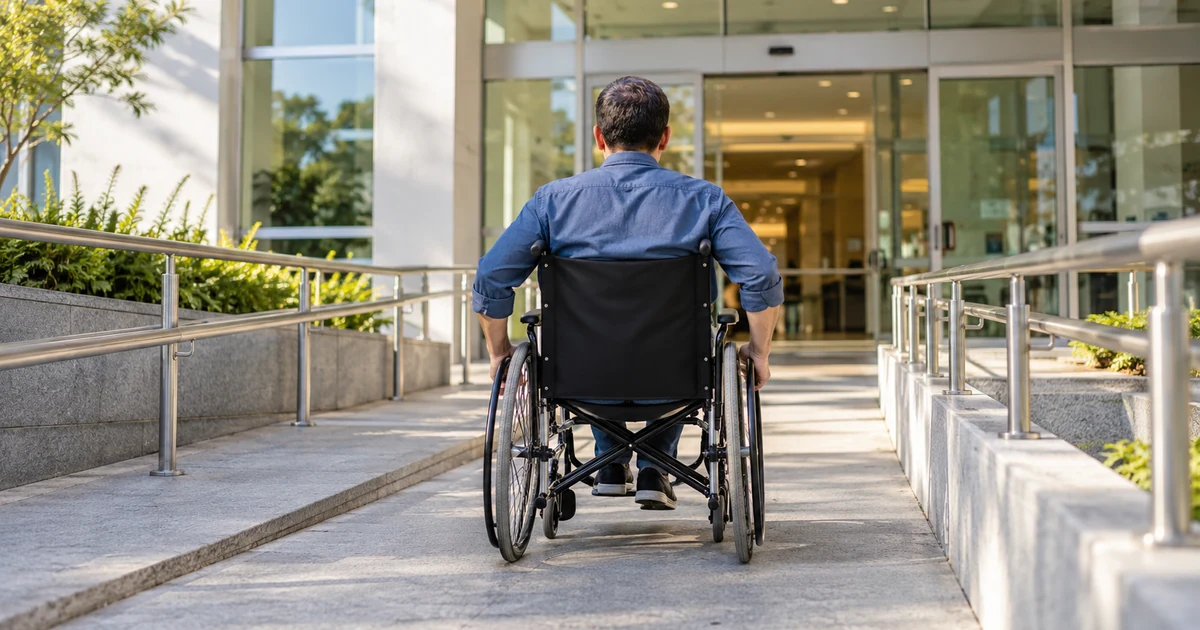
The cover image is an AI-generated illustration of an imagined ramp and entrance; it does not certify an actual place. To report a real barrier, describe what was observed precisely and avoid sharing personal data that is not necessary.
ConverteArq commentary
Our view is that accessibility should be considered across the whole journey. A feature in the voting machine matters, but the experience starts with information and access to the location. Reporting is more useful when it makes this sequence visible and explains what the figures can and cannot show. A registration count can inform planning without automatically proving that inclusion has been achieved.
Careful reporting also avoids turning people into involuntary examples. A fictional scenario can explain service questions while respecting the individuality of voters. Useful information is specific and verifiable: which location is assigned, what support should be checked and where to clarify a question.
Sources and verification
The Senate report was published October 9, 2026. TSE material was checked October 19, 2026. The commentary above is editorial analysis; the example is fictional.