How semi-automated offside technology works in football
Prepared with AI assistance; sources are identified and the commentary is original. Editorial method and corrections
Cameras, ball data and video officials can work together to flag a possible offside position. The system supports the decision-making process; it does not turn every offside judgment into an automatic call. This guide summarizes FIFA’s description of the system used at the 2022 World Cup and does not claim that the same setup was used in a particular 2026 match.
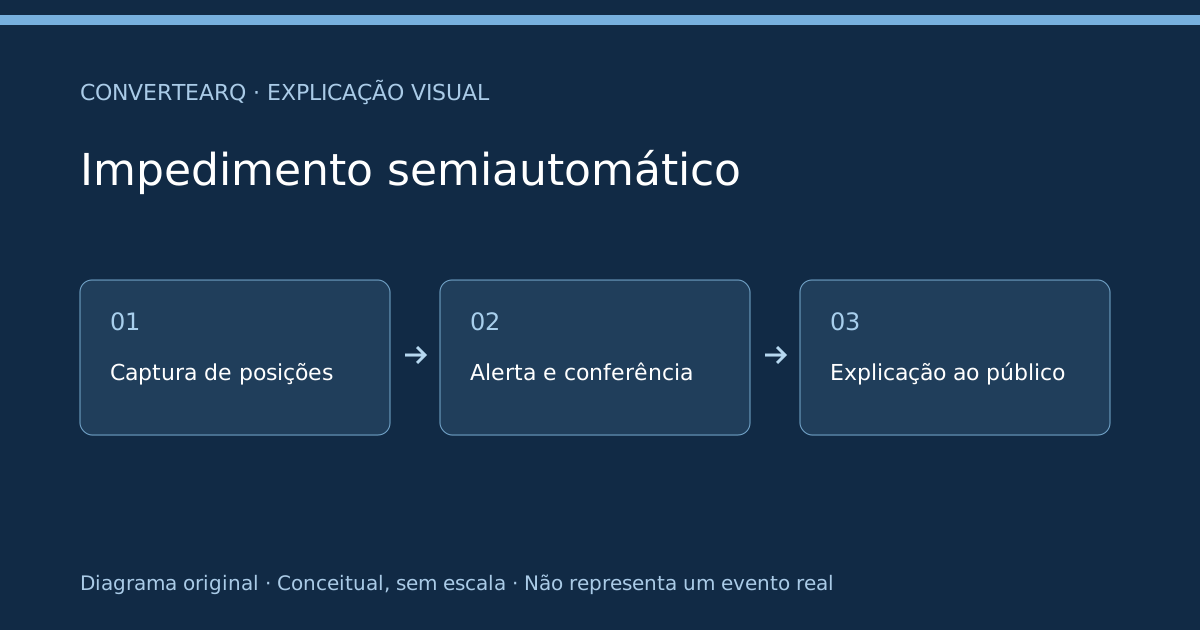
What the system tracks
FIFA’s documentation for the 2022 World Cup describes 12 dedicated tracking cameras. They followed the ball and up to 29 data points on each player 50 times per second. In that tournament’s setup, a sensor inside the ball sent data 500 times per second to help identify the kick point in close calls.
The system combined player and ball data with artificial intelligence to alert video match officials when an attacker received the ball from an offside position at the moment a teammate played it. These figures describe FIFA’s 2022 implementation; they should not be treated as specifications for every competition or today’s installations.
Why the kick point matters
Offside position is assessed at the moment a teammate plays or touches the ball. Players and the ball are moving, so observations from neighboring video frames can show different positions. The system proposes a kick point and an offside line using tracked body points; video officials check those proposals before the result is relayed to the referee on the field.
FIFA says the officials can manually select a different kick point or redraw the line if they disagree with the proposal. The technology therefore helps locate and compare positions, while the officials remain responsible for validating the process.
What the animation can show
After the decision is confirmed, the same positional data can be used to generate a three-dimensional animation for stadium screens and broadcasters. The animation helps explain the selected instant and relevant body positions. It is a visualization created from tracking data, not ordinary television footage or an independent replay of the event.
A generic diagram, social-media crop or animation from another match cannot establish which equipment was active or how a specific incident was reviewed. For a particular game, consult the competition’s official explanation and evidence about that incident.
Where human judgment remains
FIFA states that the tool supports the offside process but does not decide every consideration. Whether a player in an offside position interfered with an opponent, for example, remains a matter for the referee. Complex sequences can also require a longer review.
This article does not claim that the system was used in the São Paulo–EC Vitória match that inspired the search, and it does not assess a call, club or official. The cited FIFA material concerns the 2022 World Cup; local competition procedures and equipment need separate confirmation.
Sources and verification
FIFA’s official technical page was checked on 17 October 2026. It describes the 2022 World Cup implementation and was last updated 17 July 2023. This article summarizes that source; it is not an independent equipment test.
ConverteArq commentary
Sports technology is easier to understand when coverage separates three stages: collecting data, checking a proposed decision and explaining the outcome. An animation can make the final explanation clearer, but its polished appearance does not answer every question about the review itself.
Our view is that transparency matters as much as speed. A useful account says which system and competition it is describing, what the software contributes, what officials still decide and what information is unavailable. That distinction helps readers discuss the technology without treating a generic graphic as proof about a real play.